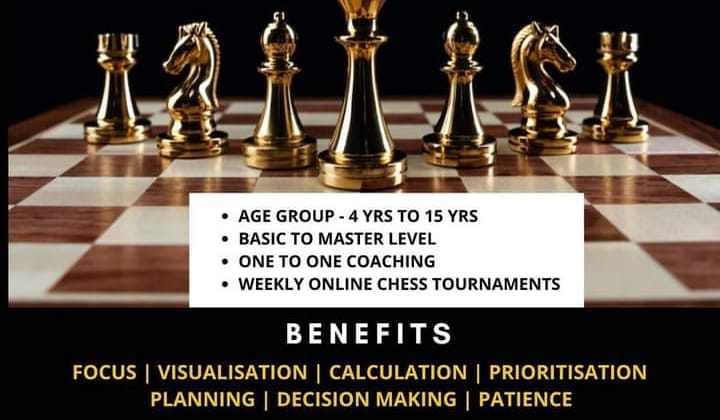
Chess Tournament preparation pre-game and post-game routines by International -FIDE Title Awardee KUNAL SIR
Tournament
preparation is a structured process designed to maximize your mental sharpness
and minimize fatigue. It involves consistent tactical drills, physical rest,
and familiarization with the tournament playing environment.

Pre-Game
Routine (Days Leading Up to the Event)
- Tactics and Strategy: Solve \(10\) to \(15\) tactical
puzzles daily to sharpen your brain without overexerting yourself. Focus
on accuracy rather than speed.
- Opening Refreshers: Avoid cramming new lines.
Instead, review the first \(4\) to \(6\) moves of your main game, study
one model game per opening to remember strategic ideas, and quiz yourself
on key structures.
- Physical Board Practice: Practice using a real chessboard
and clock. The physical transition can be disorienting if you only
practice on screens and mobile.
- Logistics and Mindset: Familiarize yourself with the
venue, rules, and tie-break systems so there are no surprises. Get
adequate sleep and avoid heavy meals before the game to prevent fatigue.
- Total Rest: Stop intense chess study \(24\)
to \(48\) hours before the tournament starts to let your brain absorb the
learned information.
Pre-Game
Routine (Day of the Game)
- Pre-Game Meal: Eat a balanced, nutritious meal
about \(1.5\) to \(2\) hours before the round starts to sustain your
energy. Avoid sugar crashes.
- Mind Clearing: Stop all preparation \(30\) to
\(60\) minutes before the game. Many professionals recommend simply
resting, taking a brisk \(20\)-minute walk to get oxygen flowing, or
listening to calm music.
- The Warm-Up: Do \(2\) to \(3\) easy rounds
of puzzle rush to "wake up" your tactical vision just before the
round begins.
- At the Board: Ensure your scoresheet is ready
and take a moment to breathe before shaking hands and starting the clock.
Post-Game
Routine
- Emotional Neutrality: Treat each game as a fresh
start. Avoid dwelling on blunders or becoming overconfident after a win;
keep your emotions balanced.
- Objective Analysis: Do not rely on your immediate
assumptions after a match. Input the game into a chess database or
analysis tool using an engine to find your mistakes without being overly
critical of yourself.
- Identify Critical Mistakes: Look for the turning point of
the game rather than just the final blunder. Was it a misunderstood
opening variation, a misplayed pawn structure, or a missed tactical
opportunity?
- Log for Future Reference: Write down key moments from
your game in a notebook or digital file. This creates a personalized study
guide for your specific blind spots.
- Physical and Mental Reset: Walk away from the analysis
area, stretch, hydrate, and prepare for the next round by resting.
Sportsmanship training
Chess
sportsmanship training involves building emotional resilience, adhering
strictly to touch-move rules, and mastering the physical etiquette of
over-the-board play. It teaches players to accept both wins and losses
gracefully, manage tournament pressure, and respect their opponents before,
during, and after the match.
Key
Components of Chess Sportsmanship
Teaching and
practicing good sportsmanship build essential character traits and prevents
common tournament penalties.
1.
Pre-Game Etiquette
- The Handshake: Always greet your opponent with
a firm handshake or a polite nod before the start of the clock.
- No Distractions: Switch off your mobile phones
completely. Distracting the opponent by staring aggressively, hovering
hands over the board, or making loud noises is strictly against tournament
conduct.
2. During
the Game
- The Touch-Move Rule: Practice the strict discipline
of \(1\) piece \(=1\) move. Rehearsing this physically helps prevent
illegal moves and the resulting time penalties.
- Scorekeeping: Write down your move on the
scoresheet before you press the clock. Maintain clear and accurate
records of the game state.
- Draw Offers: Make draw offers politely, and
do not repeatedly offer draws when you are in a clearly losing position,
as this can be considered poor etiquette.
3.
Post-Game Protocols
- Resigning Gracefully: Learn when a position is
undeniably lost. Resign with dignity instead of playing out a clearly
hopeless endgame just to make your opponent work harder.
- Handling a Loss: Do not blame the clock, bad
luck, or external factors. Take accountability for your moves and analyse
your mistakes for self-improvement.
How to
Train Sportsmanship
Good
sportsmanship can be developed through a combination of structured practice and
emotional control training.
- Simulated Tournaments: Practice under realistic time
controls to build endurance and get accustomed to the pressure of playing
in silence.
- Post-Game Analysis: Review your games critically
without ego to find tactical errors. This helps players realize that
losses are just learning opportunities rather than personal failures.
- Physical Fitness & Diet: Chess is an exhausting mental
sport. Staying physically fit, getting good sleep, and packing nutritious
snacks helps control irritability and impulsive decisions during long
tournament days.
Thank
You
BIRATI
CHESS ACADEMY


