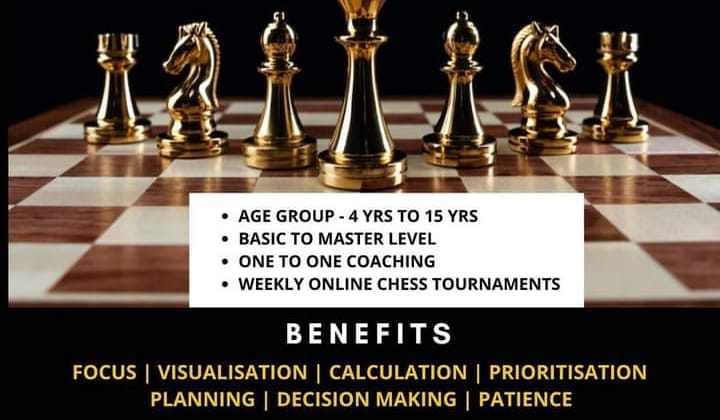
Chess & Strategy: The Psychology
of Chess
By International Title Awardee KUNAL
SIR
The world of chess is not just a complex web of rules and
tactical chess moves, but also contains a fascinating psychological dimension.
The so-called chess psychology is often overshadowed by the many methodological
aspects of chess and is therefore not consciously included in training by many
chess players. However, it is a decisive factor for the performance and success
of players at all levels, as it offers important, if not the most important,
starting points for self-reflection.
From the meticulous preparation of a chess game to the
conscious processing of defeats, from concentration during a match to the
skilful exploitation of an opponent's psychological weaknesses - the subject
area of psychology is wide-ranging and of great importance not only in chess,
but also in other sports.
Mental Preparation for a Game of Chess
Mental preparation is a key factor for success in a game of
chess. Before a player even makes his first move on the board, it is important
that he prepares himself both physically and mentally for the game.
The physical preparation can also be done in chess through
short stretching exercises or a movement-based warm-up to activate the body and
promote blood circulation. An accompanying short walk in the fresh air can also
help to clear the mind, promote oxygen supply and thus increase concentration.
Many players may think such methods are silly, but such rituals can distract
from nervousness, especially in tournament matches, and enable a physically
balanced start into the game.

Walks and sufficient oxygen promote concentration
Strategic preparation is also crucial. Chess players should
internalise their favourite openings, calculate endgame positions and sharpen
their tactical skills with exercises such as chess puzzles. This not only helps
to prepare for possible scenarios during the game, but also gives
self-confidence and security in one's own abilities.
Another important aspect of mental preparation in chess is
analysing your opponent. By analysing the opponent's style of play, memorising
their preferred chess openings and studying their tactical preferences, chess
players can develop counter-strategies. In this way, the opponent's weaknesses
can be exploited and his strengths neutralised more easily. In particular, a
counterattack, advantage or even a game won through such preparations has a
highly motivating effect on one's own style of play, as it is directly linked
to the feeling of happiness of a reward.
Concentration while Playing Chess
Concentration while playing chess is essential for a
successful performance on the chessboard. To improve this, every player must
learn to block out distractions and focus fully on the game. The ability to
concentrate varies from person to person, but can always be positively
influenced. In terms of local factors, creating a quiet playing environment and
avoiding distracting noises are fundamental requirements for avoiding
distractions. In terms of physical factors, on the other hand, a healthy diet
and sufficient hydration play an important role, but calm breathing and a
balanced sitting posture also help to prevent losing focus.
When all these aspects have been taken into account, there
are good prerequisites for mastering the mental challenges and successfully
implementing your own strategy and tactics. This is where classic training
comes in, as well as experience, which provides a player with a guideline over
time, e.g. for evaluating chess positions or weighing up different decision
alternatives.
Time Management in a Game of Chess
Every chess player has two opponents in a game of chess: on
the one hand his opponent and on the other hand time. And while the opponent's
playing style and skills change with every new game, the challenge of time
management always remains the same. The aim is to use time as efficiently as
possible in order to play the most effective chess moves with the least amount
of time. But what measures can be taken to pursue this goal?

The time pressure in chess is the chess player's fight
against himself
A good starting point for assessing the time intensity of
chess is provided by a quote from the Austrian chess player Rudolph Spielmann:
"Play the opening like a book, the middle game like a
magician, and the endgame like a machine."
Although this quote does not reveal any great secrets, it
does hint at how a chess player can save time. By learning and rehearsing chess
openings in detail, they can be played from memory and consequently save a lot
of time when executing the first chess moves. This almost automated playing of
chess openings also explains the very fast chess moves that can be observed at
the beginning of a chess game in tournaments or reports. The middle game, on
the other hand, requires a mixture of talent, training and experience. It is
the core of a chess game, characterised by a high level of complexity and
therefore places high demands on the concentration and decision-making of both
players. Through intensive training, the development of the ability to
recognise mating patterns and a great deal of discipline, a chess player can
increase the speed of his moves in the middlegame and at the same time put his
opponent under pressure. The same applies to the endgame, except that it offers
less room for creative moves and mistakes. Here the chess player is required to
internalise the different types of endgames and execute them precisely. In
combination with time pressure, the endgame represents the greatest challenge,
which can only be mastered with intensive training. However, there are many
ways to practise and chess puzzles in particular are ideal for endgame
positions.
Learning from Defeats
Dealing with defeats is an unavoidable part of the game of
chess and an important topic in chess psychology. How a chess player deals with
defeats has a significant influence on the development of his mental strength
and his performance on the chessboard.
It is important to accept that defeats in chess are
inevitable and part of the learning process. Defeat may even be the best
teacher, as it provides insight into both the opponent's strength and the
mistakes that need to be avoided in order to overcome the same hurdle.
Dealing effectively with defeat also requires the ability to
control your own emotions. It's natural to feel frustrated or disappointed when
you lose, but it's important not to let these negative emotions get the better
of you. Especially in tournaments where several chess games are played, an
early loss could otherwise determine the outcome of the entire contest.
Even in a lost game, there are many chess moves that you
have executed correctly and game situations from which you can learn. It is
therefore extremely important that every lost chess game is documented and
analysed afterwards. There are many chess portals that offer extensive analysis
tools for recognising and evaluating your own mistakes and pointing out
alternative chess moves that would have been more promising. By internalising
this chess position and game situation, the player is optimally prepared should
such a situation - or at least a similar one - occur again.
Set Goals
Only by setting goals a chess player can visualise his
success and create a basis for his future motivation. To do this, it is
important that these goals are precisely formulated and that their achievement
can be measured at any time.
In general, every chess player should play regularly and a
lot to assess their goal achievement, but above all they should also reflect on
themselves and ask the question of whether they are satisfied with their own
performance. Although competition with other players is an important criterion
for this, the fun of playing chess should be the top priority and should not be
clouded by the overzealous pursuit of success.
Conclusion
As in many other sports, psychology is an important, if not
the most important aspect of a chess player's success. Although talent or hard
work are also decisive factors, without appropriate self-reflection or a
constructive way of dealing with victories and defeats, personal progress can
come to a standstill. The motivation to develop oneself further and not give up
should be the driving force behind every chess player. And thanks to the
findings of chess psychology, every player has the opportunity to consciously
and purposefully work on themselves.
Thank You
BIRATI CHESS ACADEMY


